What is a Growth Mindset and Why It Matters for Kids
Helping kids keep going after frustration or a setback is one of the best things we can do as parents or teachers. Maybe you’ve seen a little one get stuck on a tricky puzzle or give up after just one mistake. It can be tough to watch, but it’s also a perfect moment to offer encouragement that really makes a difference. That’s where the idea of a growth mindset comes in. It helps us support kids to feel confident and resilient, not just for school, but for all the learning and challenges life throws their way.
What Is a Growth Mindset Really?
A growth mindset means believing that intelligence and abilities can grow with effort, practice, and learning.
It is the idea that our brains are not fixed or set in stone. Instead, they are flexible and changeable, which is great news for any child who is still figuring things out, or adults who are learning new skills. On the flip side, a fixed mindset or deficit mindset is the belief that talent is something you either have or do not have. For example, thinking “I am just not a maths person” can stop a child before they even try.
The good news is everyone has a mix of fixed and growth mindsets depending on the situation. Mindset is not permanent. With the right support and encouragement, it can shift over time and practice makes progress!
Why Growth Mindset Matters for Children
There are many benefits to nurturing a growth mindset in kids. Children who develop this way of thinking tend to:
- Bounce back more easily from setbacks
- Stay curious and enjoy the process of learning
- Feel less afraid of making mistakes
- Keep trying even when things get tough
- Understand that challenge is learning.
Think about a child learning to tie their shoes. The first few attempts might be messy and frustrating. But with patience and encouragement, they start to get it right. Or imagine a child rebuilding a block tower after it falls down. They could get upset and give up or see it as a chance to try a new design.
One of the most important things to remember is that a growth mindset thrives in environments where kids feel safe to try. Feeling safe means children know they will not be laughed at, teased, or shamed for making mistakes. Creating a positive learning culture matters just as much as teaching skills. It starts with the adults but includes classmates and siblings at home too. Everyone should feel supported to take risks without fear!
What the Brain Has to Do With It
Here is where the science gets pretty cool. The brain is constantly changing and adapting, a concept called neuroplasticity. Think of the brain like a muscle. The more it gets used and challenged, the stronger it becomes. When children practise something hard, their brains form new connections and pathways. This means that every struggle or mistake is actually a sign of growth happening inside their heads.
Kids have an incredible advantage because their brains are wired to grow quickly and absorb new information. So when they feel frustrated or stuck, it is not a sign that they cannot learn. It is proof their brains are working hard to build new skills.
I always explain this to my class by comparing our brains to muscles and challenging learning as lifting weights. Eventually we will get really good at the things we once found difficult, so we have to make sure we then take up the next challenge, or try use a heavier weight! If we want our brains to grow, then we need to keep challenging ourselves and not just doing the stuff we already know and now find easy.
Mindset Language That Makes a Difference
The way we talk to children about their learning can make a huge impact on how they see themselves. Using growth mindset language helps children focus on effort, strategies, and persistence rather than just outcomes. Here are some examples of helpful phrases:
- “You really stuck with that.”
- “This was hard, and you kept going.”
- “What is something you could try next time?”
- ‘I can see how hard you have been working on this problem!’
One of the most powerful words to use is yet. When a child says, “I can’t do this,” adding yet changes the whole message. “I can’t do this yet” opens the door to possibility and growth. It tells kids that just because they have not figured something out does not mean they never will. This little word works like a superpower to turn fixed thinking into growth thinking.
Of course, changing how we speak takes time and practice. Adults often need to relearn how to talk about learning because many of us grew up hearing phrases like “You are so smart” or “That was easy for you.” The goal is to help children celebrate effort and learning strategies as much as, if not more than, natural talent.
A Note on Praise It Is Not About False Positivity
Growth mindset is not about giving endless praise or pretending everything is perfect. It is about offering honest and meaningful feedback that recognises the learning journey. Instead of saying, “You are so smart,” try something like, “You used a clever strategy to solve that.” Specific feedback shows children that their effort and thinking matter more than just the result.
Empty or exaggerated praise can sometimes backfire by making children feel pressure to be perfect or afraid to fail. Real confidence comes from knowing that trying hard and learning from mistakes is what counts.
Why Explicitly Teaching Growth Mindset Is Worth the Effort
Children with a growth mindset feel more capable, curious, and confident when faced with challenges. They learn to see mistakes as opportunities to improve rather than signs that they are not good enough. When we model and support this mindset, we are not just teaching kids how to learn. We are helping them believe they can.
It is not about doing it perfectly every time but about growing together, step by step.
Play Builds Growth Mindset Too
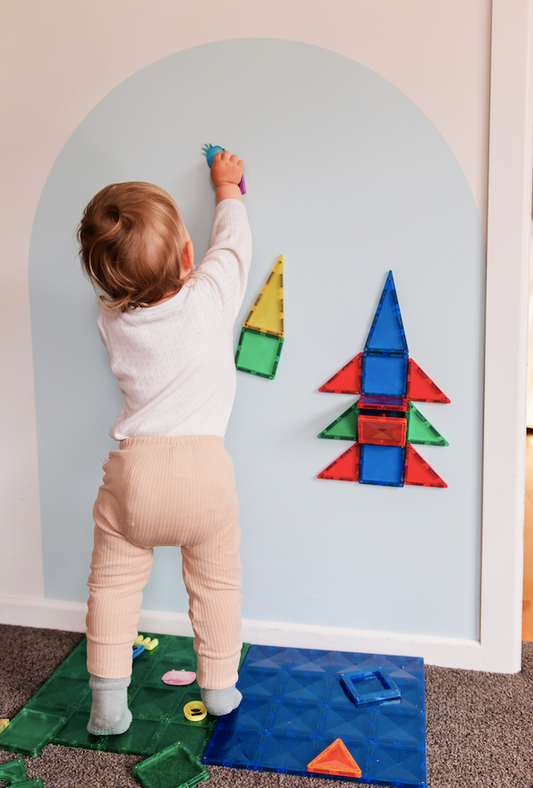
Play is a fantastic way for children to develop a growth mindset without even realising it. Open-ended play encourages kids to take risks, try new ideas, and experiment. When their block tower falls down, they can try again and build it differently. Play teaches children that failure is just a part of the process and that creative problem-solving is fun and rewarding.
By creating safe spaces for children to explore and learn through play, we are giving them the tools to become confident lifelong learners.
Want to learn more?
Check out these related posts:
- The Magic of Mark Making: Early Scribbles Building Big Skills
- Play That Grows With Them: Choosing Toys That Last Beyond a Phase
- Fine Motor Skills for Preschoolers: 10 Easy Activities That Really Work!
Or explore our product page for toys designed by a teacher to support play and learning: