Fine Motor Skills for Preschoolers: 10 Easy Activities That Really Work!
Playing in all sorts of different ways literally helps children develop fine motor skills! The goal isn’t to master a skill on the spot, it’s to give little hands, wrists, and arms lots of chances to try, explore, and grow stronger over time.
Fine motor skills are the foundation for everyday independence: from writing and drawing to zipping jackets and opening lunchboxes. Give some of these easy-to-set-up, low-stress activities a go!
1. Draw, scribble, and doodle
Offer all sorts! Crayons, felts, pencils, chalk, paint… Big arm movements and tiny finger control both matter, so mix it up with vertical surfaces, large paper, small post its, old boxes, and outdoor concrete as options to draw on. Any sort of ‘mark making’ practice is essential pre-writing skill development!
2. Playdough
It’s a classic in every kindy and ECE centre for a reason! Squeezing, squashing, rolling and pinching playdough is really good and strengthens all sorts of small muscles in little hands and fingers! The more they play, the stronger their hands become. Over time, you’ll start to see their playdough creations become more detailed and imaginative. It’s fine motor development disguised as fun!
3. Sort, stack, and match
Ask your child to sort magnets, buttons, blocks, leaves, or toys by colour, shape, or size. Sorting involves grasping, releasing, and making small adjustments with the hands. Can be made more difficult by picking up with play tweezers, a spoon or mini tongs.
Bonus: Sorting by a specific attribute (like colour or size) is also essential early learning for math and problem solving skills, helping children learn to classify, compare, and notice patterns.
4. Scrunching
Scrunch up newspaper, magazines, phone book pages (do they still exist?), any scrap paper into small balls! For an extra challenge try to smooth it out again carefully. To make more difficult: try one piece of paper in each hand or only use hands and fingers, no using the table or chest to help scrunch!
5. Ripping
Ripping goes perfectly with scrunching. Let the kids go wild explore tearing up paper, card and cardboard of different thicknesses. It’s a great way to build hand strength and coordination.Want a fun challenge? Draw a large circle or square and see if they can rip along the outline to create the shape.
6. Cutting paper and playdough
Using scissors is an essential life skill. Give children plenty of opportunities to practise with child-safe scissors. Cutting helps build control, grip strength, and bilateral coordination, which are all important foundations for fine motor development and everyday independence.
7. Manipulating magnets
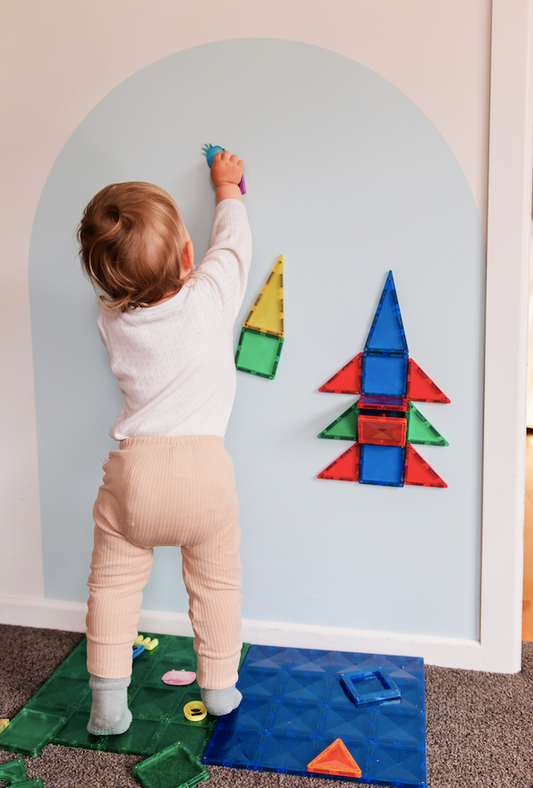
Picking up, placing, sliding, and moving magnets across a surface is great for building hand strength and coordination. It encourages controlled finger movements and hand eye coordination as children position pieces. The repetitive motions involved help strengthen the small muscles in the hands while also supporting focus and spatial awareness.
8. Get into stickers
Peeling and sticking builds finger control and is oddly satisfying for kids. A simple setup idea is to draw a large shape or letter on A4 paper or bigger, then have your child place stickers to cover the lines. Peeling, carefully placing each sticker, and making sure it’s stuck down uses lots of tiny muscle movements in the hands. It’s a fun and easy way to support fine motor development. (Plus, who doesn’t love stickers!)
9. Threading and lacing
Use beads, pasta, or large buttons with string to practise pinching the string and carefully threading it through small holes. This activity helps develop precision, concentration, and hand eye coordination. Add pattern following for an extra challenge and even more skill building. In a pinch, holes punched into cardboard make a great last minute option for threading play.
10. Playing with water
Always a winner on a hot day (or try warm water on a cooler day!) Try using sponges, droppers, spray bottles, small cups, and ladles. Water play adds natural resistance, which helps build strength in little hands without them even realising it. You can simply let them explore with a big bucket of water, create potions or set up fun challenges like measuring, pouring, or “fill the bucket” races. Bonus: it also builds those all important car washing skills every kid needs to learn!
Ready to get those little hands moving?
The best part about these activities is that they’re simple, fun, and don’t require fancy equipment! Just everyday moments filled with play and exploration.
Remember, every scribble, pinch, and peel is a small step toward big skills that will help your child gain confidence and independence. So take a deep breath, enjoy the mess, and celebrate the tiny wins along the way!
Happy playing!
Want to learn more?
Check out these related posts:
- Fine Motor Skills: What They Are, Why They Matter, and How to Build Them Through Everyday Play
- Fine Motor Skills: Little Moves for the Future
- What Is Open Ended Play? Why It Matters for Development
Or explore our product page for tools designed to support fine motor development: