Raising Capable Kids: How to Nurture a Growth Mindset That Builds Resilience and a Love of Learning
Growth mindset has become one of those phrases that pops up on posters and Pinterest boards, but behind the buzz is a genuinely powerful idea. At its heart, a growth mindset is about believing that we can grow and learn through effort. And in a world where kids face early pressure to be perfect and to get everything right the first time, that belief is more important than ever.
This post is your deep dive into what a growth mindset really is, why it matters, and how to teach it in ways that actually stick. We will explore how it links to resilience, student agency, and mental wellbeing, plus how challenge is the secret sauce to real learning.
What Is a Growth Mindset and What Is It Not
A growth mindset is the belief that abilities and intelligence can grow through effort, persistence, good strategies, and learning from mistakes. It means understanding that we are not born being good or bad at things like maths, art, or reading. Instead, we get better with time, practice, and support.
This is different from a fixed mindset, which says your ability is something you either have or you do not. If you have ever heard a child say, I am just not a maths person or I cannot draw, that is a fixed mindset talking.
Important things to know:
- Everyone flips between both mindsets depending on the task or situation
- Growth mindset is not about endless praise
- It is not about pretending everything is easy
- And it is definitely not something children automatically learn just by hearing the phrase. It needs to be taught, modelled, and lived
Why Explicitly Teaching Growth Mindset Is Worth the Effort
Children benefit most when growth mindset is something we talk about, not just model quietly. When kids learn to name their thinking, they can start to shift it. They begin to catch themselves in the “I can’t” moments and add one powerful little word: yet.
Teaching the why behind growth mindset helps kids take it seriously. It gives them language and tools to move through frustration instead of avoiding it. And over time, they become more capable, confident learners who are willing to try.
Brain Science for Kids: Learning Literally Grows Your Brain
Here comes the science bit, but it is the fun kind. Our brains are always changing. This is called neuroplasticity. It means the brain can form new connections and get stronger with use.
The best way to explain this is with a muscle analogy. When you practise something hard, like learning to ride a bike or a new maths strategy, your brain is lifting weights. It is getting stronger each time you try, even if it feels messy at first.
If something feels too easy, it usually means your brain is not being challenged. Real learning happens when it is tricky. That feeling of “this is hard” is your brain working. And that is exactly where the magic is.
Here’s a bit more brain science for those curious: the brain builds insulation called myelin around pathways it uses often, like an insulation. The more you practise, the better insulated these paths become, helping signals travel faster and smoother. That is why repeated effort is so important. And remember, rest and sleep are just as vital! Your brain needs time to cement all that hard work. (This is also true for teachers!)
Helping Children See That Challenge Equals Learning
A common trap is when kids believe success means things should come easily. If they have to work at something, they assume they are doing it wrong.
But challenge is not a red flag. It is a green light! It means learning is happening. It means our brains are literally getting stronger!
You can help children shift their thinking with small changes in language. Try saying:
- “This is stretching your brain”
- “That mistake taught you something”
- “If it feels easy, your brain is not growing today”
This also means creating a home or classroom culture where challenge is expected and celebrated. That might mean slowing down the rush to help, letting kids sit with the tricky part, and reminding them that challenge is part of the plan.
And of course, creating a safe learning space matters too. Kids need to know they can try without being laughed at or teased. That includes siblings. Supporting each other’s learning should be part of the family or classroom culture.
Encouraging a Growth Mindset: What Adults Can Say and Do
Language That Supports Growth Mindset
The words we use matter. A lot. Children are always listening and learning how to speak to themselves from the way we speak to them.
- Use the power of yet: “You haven’t figured it out yet”
- Focus on the process: “You kept trying different ways until it worked”
- Encourage problem-solving: “What could you try next time?”
Praise That Builds Confidence
It is tempting to say “You are so smart” but that can backfire. Kids might start avoiding challenge to protect that label.
Try these instead:
- “You really thought that through”
- “That took grit. You stuck with it even when it was hard”
- “You tried three different strategies until something clicked”
On Awards and Rewards: More Than Just Participation Trophies
It’s tempting in classrooms and homes to hand out awards for just showing up or participation. While encouragement matters, these kinds of trophies can sometimes send the message that bare minimum is enough. That is not the same as celebrating genuine effort and growth.
A better approach is to really know your learners. What looks like a very good attempt for one child might be different for another. Celebrate those individual wins, however big or small.
For example:
- A student who usually avoids maths tries a tricky problem and sticks with it, even if not fully mastered yet - this is still worth celebration to build confidence.
- A child who struggles with handwriting improves their letter formation after much practice
- Someone who is shy volunteers an answer for the first time
- Someone who has been so afraid of swimming lessons manages to challenge themselves to put their head under and blow bubbles after many attempts!
When rewards and praise match real progress, kids feel seen and motivated to keep growing, not just to collect another sticker.
Modelling a Growth Mindset as an Adult
Children learn just as much from what we say to ourselves as from what we say to them. One of the most powerful ways to teach growth mindset is to model it out loud. Talk through your thinking when something is hard. Let them hear you reflect, adjust, and try again.
But just as important is what not to say. Be careful about accidentally reinforcing fixed mindsets with comments like, ‘I am just not good at maths’ or ‘I never had a maths brain.’ Kids hear these and often assume the same will be true for them.
Even if those things felt true for you once, they are not helpful for the learners listening now. Instead, try something like, Maths was tricky for me at school, but I know we can get better with practice! (The amount of times a parent has said this to me, in front of their child… too many times to count! So sad for the child but also for the parent! So glad our education system has changed!)
Normalising Mistakes and Modelling Resilience
Let kids see you get things wrong. Have a go at verbalising what you are doing to work through a challenge.
“That didn’t go the way I planned, but I am going to try a different way”
“I made a mistake. Let’s figure out what we can learn from it”
And yes, we have all met a couple of adults who could use a little more practice with this too. Growth mindset is a lifelong journey and requires constant practice unfortunately!
Building a Positive Culture for Learning
This part is essential. Children need to feel emotionally safe to stretch themselves. That means:
- No teasing or put-downs (but you already know that one!)
- Celebrating effort in front of others
- Celebrating each others effort and progress
- Talking about mistakes and challenges without shame
- Encouraging kids to support each other
When the culture is right, children start to take more risks, support their peers, and see learning as something shared, not something judged.
Although sometimes they can start getting a little too ‘supportive’ and helping becomes doing for. In my class we often have big discussions around the difference between helping someone with their learning and doing their learning for them, which doesn’t really work quite the same!
Growth Mindset and Student Agency: Building Learners, Not Just Rule-Followers
When kids see challenge as learning, they become more active in their own growth. This is where student agency comes in.
Growth mindset supports children to:
- Set goals
- Reflect on what worked and what did not
- Choose different strategies
- Use tools instead of giving up
- Going back to improve work
- Keep going after setbacks.
At school, this might look like learning journals, goal check-ins, or self assessment against the learning outcomes. At home, it might be as simple as asking, “What would you do differently next time?”
Helping children understand what the next step looks like is crucial. Without that clarity, “try again” can feel like banging your head against a wall. It is about guiding them to reflect and plan, not just keep repeating the same effort.
The key is helping children see themselves as capable, growing learners, not just rule-followers ticking off tasks.
I like the prompt 'two medals and a mission' when students are doing self assessment. They can find two things they’ve done well (hopefully against the learning criteria) and one thing to focus on next time. Great for building student agency as well. Also then once they start to get the hang of this they can buddy review work together! (Which often helps with teacher marking time too!)
Resilience and Mental Health: More Long-Term Benefits
Resilience is the ability to keep going when things are hard. It is not about being tough all the time. It is about knowing that challenge is okay and that you have the tools to handle it. When we hit a rough patch, we want to be like a rubber ball, not a lightbulb!
Growth mindset helps build this resilience. When children believe they can grow through effort, they are more likely to:
- Try again after setbacks
- Manage frustration
- Cope with challenges in healthy ways
This has a direct link to mental health. Kids who feel capable, not perfect, are more able to handle the ups and downs of life. They are less likely to give up or spiral into self-doubt when things go wrong.
Resilience also supports emotional regulation and self-worth. Children learn that mistakes are not threats to their value. Instead, they are chances to grow.
This does not mean pushing kids too hard. A safe, supported challenge with scaffolding is always the goal! And mindset gives them a way to face hard things without feeling alone in it.
With more children experiencing anxiety and perfectionism at younger ages, these mindset tools matter more than ever. And every chance we have to practice these skills when the stakes aren’t too high, the better! (Although learning to ride a bike does feel like very high stakes when your just little!)
What This Looks Like in Real Life: Everyday Examples
Developing a growth mindset does not have to be a sit down lesson, although explicit teaching is also useful. But developing a culture of growth mindsets lives in the little moments of the day to day. Here are a few:
- When a child melts down after a drawing “goes wrong” and recouping to try again
- Rebuilding a block tower after it falls by accident
- Misspelling a tricky word, then trying again and using a tool to figure it out
- Losing a game but handling it, ready to try to win next time
- Picking new times tables to learn, not just practicing the ones they have already learnt
- Having an untied shoelace, then figuring out a solution
- Getting stuck on a new word in their story book but trying to sound it out.
These are all chances to reinforce the idea that trying again is part of learning, and that it is okay not to get it right the first time!
Common Pitfalls and What to Watch For
Sometimes, even with the best intentions, growth mindset can go a bit sideways. Here are some things to look out for:
- Telling kids “Just keep trying” without helping them know what the next step is
- Praising effort without talking about strategy or adjustment
- Turning growth mindset into a poster on the wall, not a practice and culture
Children need to understand what they could do differently, not just that they should persist without a focus. Otherwise, trying again can feel like banging your head against a wall. And that’s just not fair to them or us.
Real growth happens when effort meets reflection and support as well as guidance when the next challenge begins. Sometimes help with the first step or modelling an example is all they need to try on their own!
Why It’s Worth It: The Long Game of Learning and Life
Having a growth mindset helps children become confident learners who believe they can grow and learn not just in their skills, but in their self-belief. It sets them up to try, reflect, adjust, and try again, and that’s exactly what real success looks like. Not perfection. Not always getting it right the first time. But showing up with persistence and possibility.
It supports creativity, curiosity, emotional wellbeing, and resilience. Kids who believe they can learn are more likely to want to learn. They’re more open to challenge, more willing to experiment, and more capable of handling setbacks without giving up.
And for families and classrooms, it shifts the focus. We stop celebrating only the polished end result, and start celebrating the process! The effort, the grit, the aha moments, and even the flops along the way.
Growth mindset reminds us that learning is not a race to get everything right. It is a journey of figuring things out, together. And that? That’s all we can really ask!
Want to learn more?
Check out these related posts:
- The Ultimate Guide to Independent Play for Kids
- From Wobbles to Wiggles: Building Strong Gross Motor Skills Through Everyday Play!
- Swap the Script: Developing a Growth Mindset One Phrase at a Time
- What is a Growth Mindset and Why It Matters for Kids
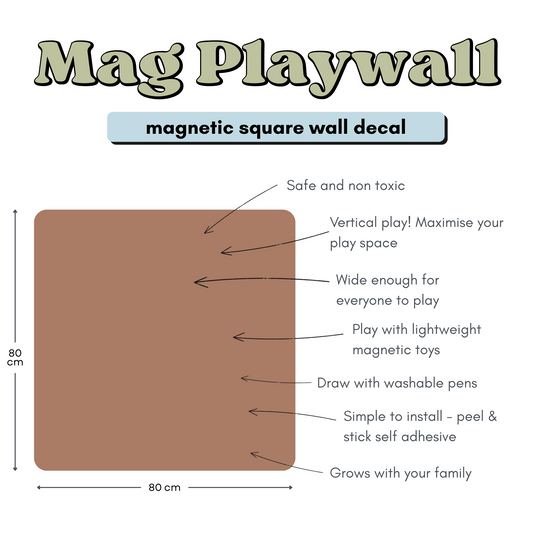
Explore our product page for tools designed by a teacher for open ended play to support the development of growth mindset:
- The Mag Playwall!
- Washable Crayons!