Why Vertical Play Is So Good for Kids
When we think about play, we often picture it happening on the floor. Blocks, puzzles, toys spread out in every direction. But there's a whole world of developmental benefits to be found when you take play up, more than saving space on your floors!
Vertical play invites children to interact with the world at eye level, using large and small muscles in different ways and giving their brains a new kind of challenge. Whether they’re arranging magnetic letters, building a ball run, or drawing on a wall surface, vertical play offers so much more than just a change of angle.
Here’s why it matters.

It engages the whole body (not just hands)
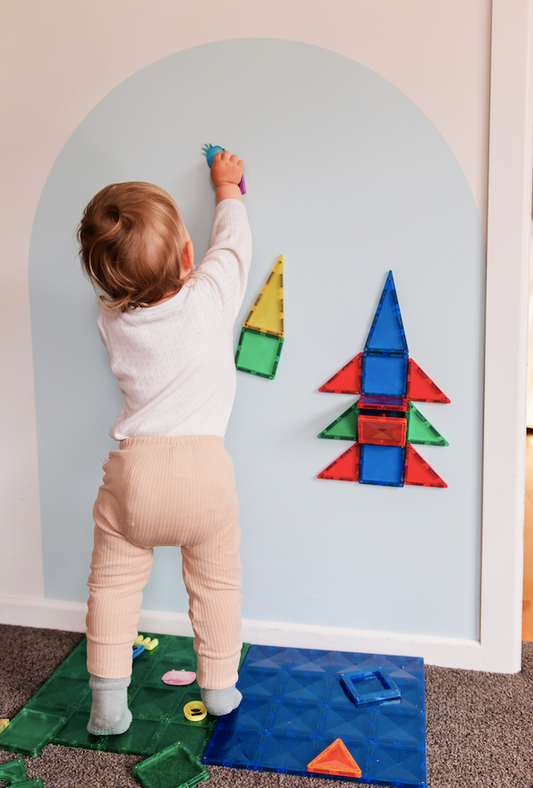
When kids play on a vertical surface, they naturally stand, stretch, and move around more. This kind of active positioning helps with gross motor skill development. These are the big muscle movements that support balance, posture, and coordination. Reaching across their body or above their head helps build strength, stability, and even midline crossing which is important for learning to read and write later on.
Developing core strength is especially important in early childhood as it forms the foundation for almost everything from sitting upright in class to running, climbing, and even handwriting. Using a vertical surface like the Mag Playwall encourages dynamic movement. Children might sit on the floor and stretch up, kneel, or shift their weight side to side as they build, draw, or play. All of these small adjustments help strengthen their core muscles in a natural, playful way. No sit-ups required!
It strengthens fine motor skills in new ways
Vertical play also gives a boost to fine motor skill development. These are the small, precise movements that help kids with writing, cutting, dressing, and eating. When a child draws or places magnets on a wall, they use a different wrist and finger motion than they would at a table. Working at an upright angle encourages a more natural pencil grip, strengthens the muscles in the hands and fingers, and improves control.
It supports midline crossing: a big deal for brain development
One of the unsung heroes of vertical play is how naturally it encourages crossing the midline. This is when a child moves one hand or foot across the centre of their body to work on the opposite side. It may sound small, but it’s a big milestone in development.
Crossing the midline helps build the connection between the left and right sides of the brain. This is essential for tasks like reading, writing, tying shoelaces, and even riding a bike.
When children reach across a vertical surface to place magnets, draw, or build, they’re strengthening this brain-body coordination in a way that feels like play, not practice.
It builds focus and independence
There’s something about a vertical space that feels more immersive. It gives a sense of “this is my canvas” and that kind of ownership can be powerful. Children tend to stay more engaged when they’re standing and using a larger area to explore, sort, or create. Vertical play can also encourage independent play because it’s open ended and self directed by nature.
It saves space and looks great
Let’s be honest. Most families don’t have a spare room for a playroom setup to contain the chaos of play and toys. That’s where vertical play really shines. Using the walls means saving floor space, keeping things tidy, and turning everyday walls into creative zones.

Easy ways to bring vertical play into your home
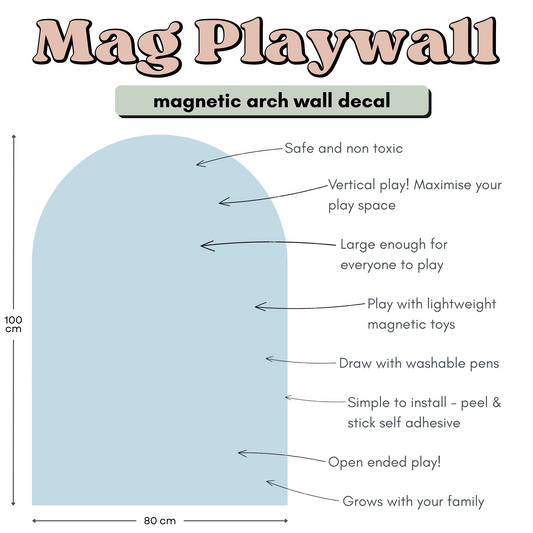
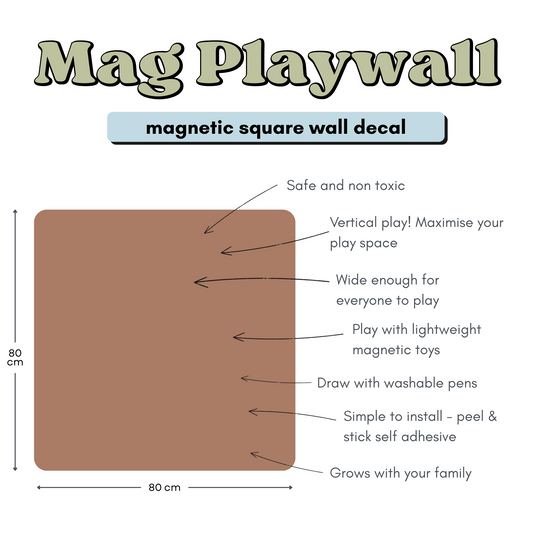
The Mag Playwall was designed specifically to make vertical play simple and beautiful. It’s magnetic, writable, easy to install, and sized just right for children to reach and move comfortably. No tools, no fuss, and no cluttered floor.
Here are a few other easy ways to encourage vertical play at home:
- Stick paper to the wall for drawing, painting, or sticker play (Lots of these fine motor skill activity ideas could be done vertically!)
- Use masking tape/painter’s tape to create a vertical maze, toy car track or number grid
- Let kids draw on the fence with chunky chalk (bonus: it washes off in the rain!)
- Add suction toys to smooth surfaces like windows or tiles
- Hang a clipboard at their height with colouring pages, letters, or name practice
- Use the fridge for magnetic letters, shapes, or even a DIY matching game.
Vertical play doesn’t mean a home make makeover or needing an ‘instagram worthy’ setup. Just a wall, some everyday materials, and a little time to explore. Many of the same skills show up on the monkey bars at the playground too! Building strength, coordination, and confidence through simple, engaging movement.
Want to try it for yourself?
The Mag Playwall was designed by a teacher, for exactly this kind of play. It’s magnetic, writable, and calm by design. Check it out here and see how easy it is to bring vertical play into your everyday.

Want to learn more?
Check out these related posts:
- Gross motor skills
- Fine motor skills - little moves for the future
- Fine Motor Skills for Preschoolers: 10 Easy Activities That Really Work!
- What Is Open Ended Play? Why It Matters for Development
Or explore our product page for tools designed for vertical play at home: