Tricky Words, Easy Learning: The Complete Guide to Sight Words for Parents and Teachers
Watching your child learn to read is a magical experience! Each new word they recognise on their own is a milestone, but it can also be a little frustrating when some words refuse to follow the neat phonics rules they are learning. Words like cat, dog, and hat are easy to sound out using phonics.
Then there are the words that just do not play by the rules. These tricky words, often called sight words, heart words, or irregular words, are a crucial part of early reading. This post draws on research and classroom-tested strategies to give parents and teachers practical ways to help children master these words in a playful, stress-free way.
What Are High Frequency Words? Are they the same as Sight Words?
High frequency words are simply the words that appear most often in written English. While sight words are the specific words in english that do not follow regular phonic patterns and can be tricky for early learners.
High frequency words lists include both decodable words like man, cat, dog, bed as well as irregular and tricky to sound out words like said, come or friend. Often these terms are used interchangeably but they actually have different meanings.
Sight words are the words that cannot be sounded out using standard phonics rules. These require extra attention because part of the word must be memorised. For example, the word said is tricky because the ai is pronounced 'e' instead of the expected 'ai'. Similarly, come has an o that sounds like 'uh' rather than 'oh', and friend has an ie that sounds like 'e' instead of 'ee'.
Practising high frequency and sight words alongside phonics supports reading fluency, which can help with confidence for young readers! Here is an example list of 20 first sight words, with non-decodable words underlined:
the, of, and, a, to, in, is, you, that, it, he, was, for, on, are, as, I, with, his, they.
You can see why early readers learning to decode need explicit instruction to pick out the words and sounds in those words that are different to the rest of the sound patterns they are learning.
What are ‘heart’ words or ‘tricky’ words?
Heart words and tricky words are different labels for sight words. Over time, different teachers, schools, reading programs, intervention providers, universities etc have used different terms to mean the same thing: words that early learners encounter often but can’t be decoded by the regular phonics rules.
Heart words - words to learn by heart. Often accompanied by drawing a heart around the part of the word that is not decodable.
Tricky words - words that are tricky when learning the beginnings of phonics!
Sight words - words we learn by sight instead of decoding.
Examples of Tricky Words with Non-Standard Pronunciations
- said where the ai sounds like 'e' as in bed instead of the usual 'eye' sound
- come where the o sounds like 'uh' as in cup instead of the usual long o sound
- love where the o sounds like 'uh' as in cup instead of the usual long o sound
- does where the oes sounds like 'uhz' as in buzz instead of the usual long o sound like in goes
- have where the a sounds like 'a' as in cat instead of the long a sound
- some where the o sounds like 'uh' as in cup instead of the usual long o sound
- friend where the ie sounds like 'e' as in bed instead of 'ee' as in see
- one where the o sounds like 'wuh' as in wonder instead of the usual long o sound
- school where the ch sounds like 'sk' as in skip instead of the usual ch sound
- two where the w is silent and it is pronounced like 'too'
Understanding these unusual pronunciations helps children remember the correct spelling and supports fluent reading. English really is so fun for us all, especially our little learners!
Why Quick-Fire Memorisation Does Not Work
It can be tempting to get children to memorise sight words super fast using flashcards or quick-fire drills. We often think that the faster they can say a word, the better, but research shows this is not always helpful. A study by Lynch (2024) found that repeatedly testing a child on a word without giving them time to notice the tricky part and practise it in a meaningful way does not improve their ability to spell it correctly.
Children need time to see, say, and write the word. They need to understand which part is irregular and why it is different from what they have learned in phonics. When learning becomes a rapid-fire game of memory, children may remember the word short-term but will likely struggle to spell it independently in their own writing.
Taking a slower, playful, multisensory approach helps the word stick in their memory for the long term. Not using quick-fire drills does not mean learning cannot be fun or involve games! In fact, multisensory, interactive activities are often far more engaging for children, just with time built in.
Introduce Multisensory Learning Approaches
We know that that using visual, auditory, and kinesthetic methods together helps children learn, including when learning spelling patterns and sight words. All children benefit from all three methods; there is no evidence that some children learn better through one style over another. This means combining visual, auditory, and kinesthetic activities for all children.
Visual activities include looking at words in print, using flashcards, or spotting words in books. You can underline the part of the word that makes it tricky, for example the ai in said is pronounced like 'eh' instead of the usual 'i' sound. Auditory activities include saying the word aloud, clapping out sounds, or singing the word in a song. Kinesthetic approaches involve tracing the word in sand, forming it with magnetic letters, or writing it in fun materials like shaving foam or rice!
Children should have multiple opportunities to practice the same words in different ways. For instance, spotting a word during storytime is as valuable as spelling it with magnetic letters. This repetition, combined with meaningful interaction, supports long-term learning.
Chunking Words: A Word of Caution
Breaking words into smaller parts or syllables is often useful for practising the sounds children already know. However, this approach does not always help with sight words. It only works when it is used to draw attention to the non-regular parts of a word. For example, with the word said, chunking into s-aid does not make it easier to sound out. Instead, focusing on noticing that the ai is pronounced 'eh' and practising that tricky chunk will be far more useful.
Practical Activities for Learning Sight Words at Home and at School
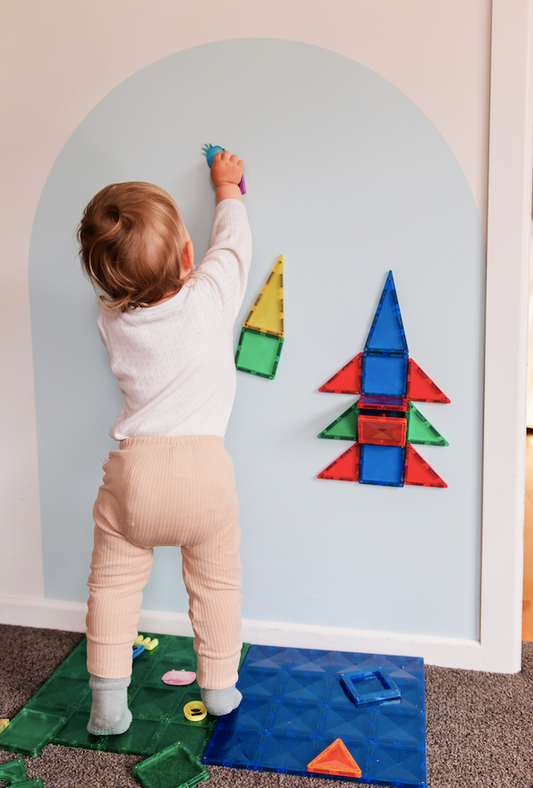
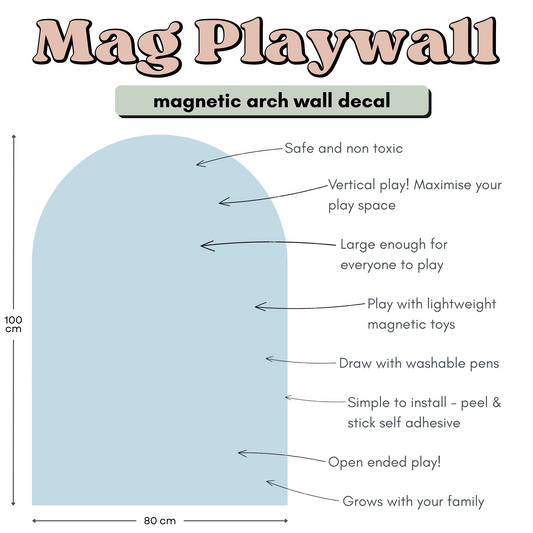
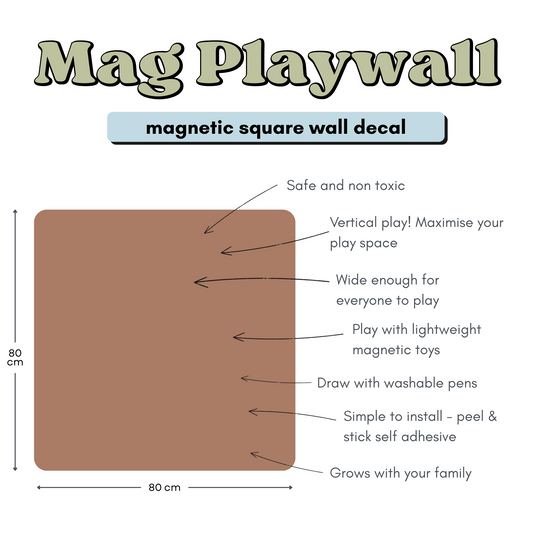
Here are some fun, research-backed strategies for helping children master sight words. These activities are designed to be playful, engaging, and multisensory. They have been tried and tested by an experienced classroom teacher who designed the Mag Playwall to support learning both at home and at school.
-
Underline the tricky part of the word
When introducing a new word, highlight the letters that do not follow the usual phonics rules. For example, underline the ai in said, the o in come, or the ch in school. This helps children focus on the part they must learn by heart. -
Use magnetic letters on the Mag Playwall
Children can build words using magnetic letters. Ask them to form the word, say it aloud, and then write it on paper or in sand. Moving the letters around engages kinesthetic learning while reinforcing visual memory. - Trace and Write
Tracing words in sand, shaving foam, dry rice or using finger paints helps connect the shape of the word with its sounds. Writing the word repeatedly while saying the sounds aloud reinforces orthographic mapping. -
Sight word treasure hunt
Hide sight words around the room or outside (can use magnetic tiles or post its!). Ask children to find them and read them aloud. Have them match them to a list provided or write out each one they find! -
Reading aloud and spotting words
When reading stories together, pause to point out sight words that they are practicing. Ask children to spot the word, say it, and underline the tricky part with their finger. -
Create a simple sight word board game
Make a board with spaces and add sight words along the path. Children move pieces and read or spell the word they land on. This is playful and reinforces repetition without it feeling like a test. This can also be done outside on concrete or vertically on your Mag Playwall! You can make simple cards to play a game like go fish with sight words or other high frequency words as well! -
Memory and matching games
This one is my favourite! Create memory cards with sight words. Children match the word to another card with the same word or a picture cue. This not only reinforces recognition but also helps build working memory, which is excellent for learning in general, especially maths! -
Listening and matching
Lay out sight words and say one aloud. Ask children to point it out and, for added challenge, write the word down. This helps reinforce listening, recognition, and writing skills all at once.
Introducing Sight Words in Steps
Starting with a small set of words helps build confidence. Here is a suggested order, broken into stages:
First 10: said, come, does, friend, school, one, love, some, have, here
Second 10: where, who, again, because, any, people, pretty, was, two, said
Challenge 10: once, eye, two, none, could, laugh, walk, talk, thought, through
Underline the letters in each word that make them tricky to help children notice patterns. For example, in said the ai is 'eh', in come the o is 'uh', in does the oes sounds like 'uhz' instead of the long o sound.
You child’s teacher will likely send home lists of sight words to practice or there may be a list in the back of the book they bring home for reading that night.
Transferring Sight Word Knowledge to Writing
Recognising sight words in reading is part of the story. Children also will start to learn to write them. Writing sentences using sight words encourages them to apply what they know and strengthens memory, while developing letter formation skills. (We do ask so much of our little people when they first start learning literacy formally!) For example, after practising the word friend, children could write I went to the park with my friend. Repeated practice in context builds confidence and fluency in both reading and writing.
Sight words also support phonics learning. While children apply phonics to decode regular words, sight words fill in the gaps for irregular words. This combination ensures children are not guessing but are reading and writing with accuracy and confidence.
Find our blog posts here all about fine motor skill development: Fine Motor Skills: What They Are, Why They Matter, and How to Build Them Through Everyday Play. Fine motor skills are essential for little hands learning to write!
Common Pitfalls and How to Avoid Them
One of the quickest ways to put children off sight words is to rush through them as if ticking a box. Speed does not help with retention and can leave children feeling frustrated. Another common trap is relying only on flashcards. While they have their place, children need to encounter these words in a variety of playful and meaningful ways so they stick.
Tricky words become far easier to remember when they are woven into everyday life. Read them in stories, spot them in signs, write them in chalk on the path, practice on your Mag Playwall with magnetic letters, or use them in silly sentences. Repetition is key, but it works best when it feels like fun rather than a test.
These words can be frustrating because they do not follow the phonics rules children are learning in the start of their literacy learning journey. That is why it is so important to give them space, time, and low-pressure practice. Keep the atmosphere light, celebrate even the smallest successes, and remember: learning sight words is a marathon, not a sprint! But keep it way more fun than a marathon!
Helping Your Child Thrive with Reading
Helping your child master sight words, tricky words, or heart words does not have to be stressful. With simple, playful activities and a little patience, your child can tackle even the trickiest words and build a strong foundation for a lifetime of reading success.
These strategies are research-backed, fun, and supported by classroom experience. The Mag Playwall is a wonderful tool for creating interactive, multisensory learning opportunities both at home and in the classroom. Remember that learning sight words is a journey. Enjoy the process, celebrate progress, and make reading and writing an adventure!
Want to learn more?
Check out these related posts:
- What are Sight Words? ‘Sight Words,’ ‘Tricky Words’ or ‘Heart Words’ Explained
8 Fun Ways to Learn Sight Words at Home or in the Classroom - Raising Capable Kids: How to Nurture a Growth Mindset That Builds Resilience and a Love of Learning
- Fine Motor Skills: What They Are, Why They Matter, and How to Build Them Through Everyday Play
Or explore our product page for toys designed by a teacher to support learning at school and home!