Fine Motor Skills: What They Are, Why They Matter, and How to Build Them Through Everyday Play
Fine motor skills are the quiet achievers of childhood development. They might not get the spotlight like learning to walk or talk, but they’re working hard behind the scenes every single day. These skills are what allow little hands to do all the big things that lead to independence, creativity, and learning. Whether it’s buttoning a coat, threading a bead, or drawing a wobbly heart for Mum, fine motor skills are the foundation for so much of what makes childhood feel joyful and capable.
As a teacher, I’ve seen firsthand just how important fine motor development is. And I’ve also seen how easy it is to build these skills in ways that feel like play instead of pressure. That’s what this guide is all about. No complicated routines, no rigid timelines, just a clear and supportive look at what fine motor skills are, why they matter, and how we can help them grow: right in our homes and classrooms, simple ways in our everyday lives.
What Are Fine Motor Skills?
Fine motor skills are the small, precise movements that involve the muscles in the hands, fingers, wrists, and forearms. These movements often happen in partnership with the eyes, which is why you’ll often hear terms like hand eye coordination or finger control.
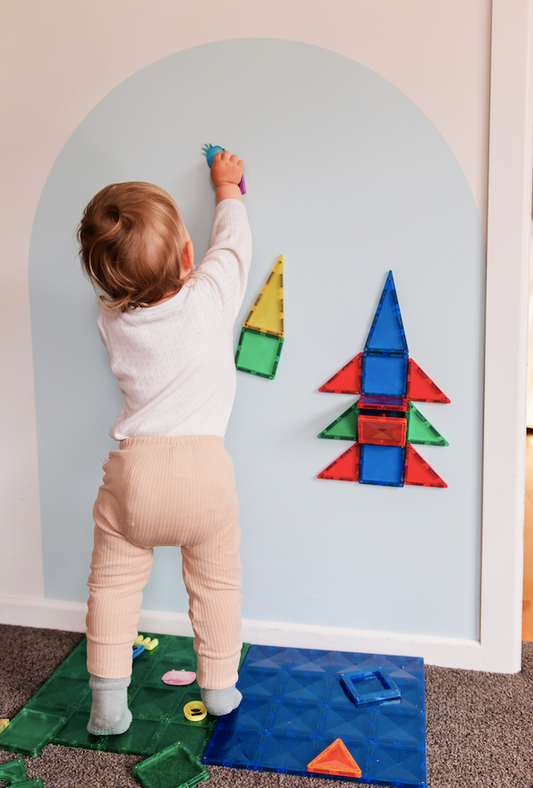
Any task that asks a child to use their hands in a careful and controlled way involves fine motor skills. That includes everything from tying shoelaces to using scissors, turning pages in a book, peeling a sticker, or carefully placing a magnet on a wall.
To adults, these movements seem automatic. But for children, they are hard-won skills built slowly and with lots of practice. That control and strength doesn’t just appear one day. It’s built through exploration, repetition, and play.
Why Are Fine Motor Skills So Important?
Fine motor development is closely linked to a child’s ability to be independent. It supports everything from holding a spoon to opening a lunchbox. In early childhood, these skills are also directly tied to school readiness. Before a child can confidently write their name, they need to build the strength and control to hold a pencil, form shapes, and move with intention.
Here’s what fine motor skills support in daily life:
- Getting dressed
- Opening snack boxes and drink bottles
- Using scissors and glue
- Writing, drawing, colouring, and painting
- Manipulating puzzle pieces and small toys
- Typing or using touchscreens
- Tying, zipping, and fastening
These everyday tasks require so much more than just coordination. They involve strength, control, persistence, and focus. And when children have those foundations in place, they are more likely to feel confident and capable in a wide range of learning situations.
Fine motor development also supports emotional growth. Think about the frustration a child feels when they can’t do something themselves. Now imagine how empowering it feels when they finally manage it on their own! Every tiny win builds confidence and sets our tamariki up to be independent people.
The Science Behind Fine Motor Skills
There is a lot happening behind the scenes when a child picks up a crayon or threads a bead. Fine motor development is closely tied to both brain development and physical development. Neural pathways are being formed and strengthened as children repeat actions, refine movements, and learn to control their bodies with increasing precision.
The hands and fingers are incredibly complex, with dozens of muscles, joints, and nerve endings working together. For fine motor skills to develop well, children need practice that is varied and meaningful. That’s where play comes in. Purposeful play provides natural, low-pressure opportunities for those neural connections to grow stronger.
Research shows that early experiences shape the architecture of the brain. Repetitive movements, sensory experiences, and problem solving through play all contribute to building strong, flexible neural networks in the brain. In other words, every sticker peeled, every magnet placed, and every bit of dough rolled out matters. It’s learning in action.
How Do Fine Motor Skills Develop?
Fine motor skills develop gradually from infancy through the early school years. At first, babies might bat at objects or grasp with their whole hand. Over time, they learn to hold things between their fingers, pass objects from one hand to the other, and isolate fingers for more controlled movements.
Here’s a very general picture of how development might look, though remember every child is different and moves at their own pace.
Babies (0 to 12 months)
- Reaching, grasping, transferring objects between hands
- Exploring textures through touch and mouth
- Beginning to point and isolate fingers
Toddlers (1 to 2 years)
- Stacking blocks
- Turning pages in board books
- Starting to scribble
- Feeding themselves with fingers or spoons
Preschoolers (3 to 5 years)
- Using scissors with support
- Drawing wobbly circles
- Threading beads
- Peeling stickers with help
Early Primary (5 to 7 years)
- Holding a pencil with control
- Writing letters
- Cutting on a line
- Increasing speed and accuracy in daily tasks
- Zipping and buttoning with growing independence.
It’s not about racing through these stages. It’s about making sure children have lots of chances to try, explore, and practise at their own pace.
What Helps Fine Motor Development?
- Fine motor skills grow through use. They don’t need to be taught in a formal sense, but they do need time and encouragement. Here are some of the most helpful supports:
- Repetition. Children learn through doing things again and again. Each time they roll out playdough or draw a line, their muscles and neural pathways grow stronger.
- Open-ended play. The kind of play that doesn’t have a right answer invites creativity, experimentation, and fine motor exploration.
- A variety of materials. Offer crayons, chalk, scissors, tweezers, stickers, magnets, playdough, and small tools. Each material works different muscles and builds new skills.
- Vertical surfaces. Working upright, like on the Mag Playwall or a chalkboard, strengthens the shoulders and wrists and helps with pencil grip later on.
- Real tasks. Let children help in the kitchen, hang laundry, pour their own cereal, or sort small items. These everyday jobs are packed with fine motor moments.
Do Touchscreens Help Fine Motor Skills?
Touchscreens can help develop some parts of fine motor control, especially finger isolation and coordination. When children tap, swipe, or drag across a screen, they’re practising small, intentional movements. These actions can support things like hand eye coordination, timing, and control, especially when they’re trying to tap a tiny icon or trace a path in a drawing app.
That said, using a touchscreen is not the same as hands on play. While it can help with precision and finger movement, it doesn’t build strength or resistance in the same way that rolling playdough or using scissors does. When using a touch screen, children aren’t learning the importance of applying different types of pressure like they would with a piece of chalk on the concrete or pencil on paper. There’s very little feedback or muscle challenge involved, and that feedback is part of what makes fine motor development stick.
So yes, touchscreens can play a small role in fine motor learning, but they work best alongside real world play. Think of screen time as a sprinkle, not the whole ice cream sundae. For strong hands and confident control, children still need the majority of time to explore, grasp, build, and create using real tools and materials. Nothing beats the power of play that you can hold in your hands.
Over the last five years or so, we’ve noticed more and more kids starting school without well-developed motor skills in their hands and arms. In some cases, children begin school unable to hold a large pencil properly because the only finger with enough strength is their pointer finger. (It’s honestly quite sad to see.) Then, teachers spend months helping these five-year-olds build their fine motor skills from scratch. Skills they really should have developed much earlier. This is why playing with physical toys, natural materials, and simple drawing tools like chalk or crayons is so important, even if it just looks like play. That play is laying the groundwork for everything that comes next.
What Tools Support Fine Motor Skills Best?
While you don’t need fancy equipment, certain tools can make a big difference. Think of them like little personal trainers for small hands.
- Tongs and tweezers. Perfect for picking up small objects like pom poms or beads, helping to build grip strength and control.
- Droppers and pipettes. Great for water play or colour mixing, and excellent for finger isolation.
- Scissors. Using child-safe scissors develops bilateral coordination, hand strength, and focus.
- Magnets. Picking up and placing magnetic pieces builds hand eye coordination and control.
- Stickers. Peeling and placing requires careful finger work and promotes precision.
- Threading and lacing toys. These help develop steady hands, concentration, and fine finger movements.
Tools that feel like toys are often the most effective. They invite repeated use, which is exactly what fine motor development needs.
10 Easy Fine Motor Activities That Really Work
We have a full post with ten tried and tested activities that are simple, low-pressure, and easy to set up at home. These include drawing, playdough, cutting, sorting, sticker play, and threading.
Each one encourages purposeful movement and play while supporting key developmental milestones.
You can read it here: Fine Motor Skills for Preschoolers: 10 Easy Activities That Really Work!
How to Support Without Taking Over - a test of patience!
This one is important. As adults, it’s natural to want to step in when something feels tricky for a child. But doing things for them, even with good intentions, can slow down their learning.
It’s especially difficult to let our kids do things themselves when we’re so busy just trying to get everyone out the door in the morning or to bed in the evening! Like how long can we really wait for them to zip up their own coat…. But when kids are given time to try, even if they don’t get it right the first time, they’re building strength, coordination, and most importantly, resilience.
Encourage them to have a go. Let them struggle a little. Offer help only when needed. Celebrate effort instead of outcome.
Say things like:
- That looked tricky, but you kept going!
- You figured out your own way to do it!
- Look how strong your hands are getting!
These moments matter. Supporting independence helps children develop a growth mindset and a belief in their own abilities.
An easy phrase to remember is: pause, prompt, praise.
Why Play Is the Best Way to Build Fine Motor Skills
Play is not a break from learning. It is the learning. Through play, children are naturally driven to repeat actions, experiment with new movements, and solve problems using their hands.
When they’re tracing a magnet trail, squeezing playdough, peeling a sticker just right, or making patterns with buttons, they’re not just playing. They’re building strength, control, and coordination.
And because they’re enjoying themselves, the learning sticks. Play is powerful like that.
How Peasy Play Supports Fine Motor Development
At Peasy Play, we believe in making fun easy and learning a joy. Our products are designed with intention and backed by real classroom experience.
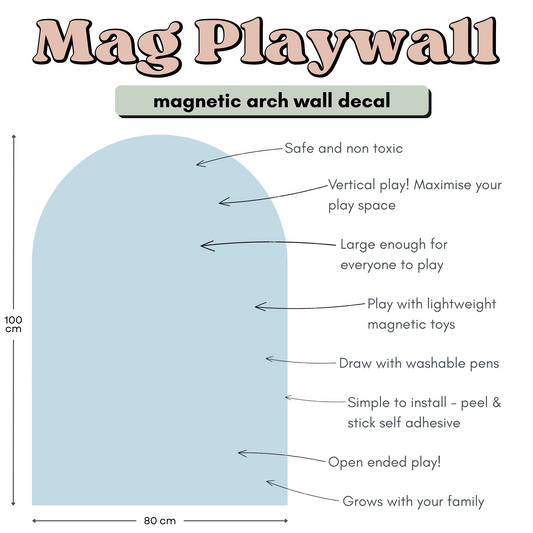
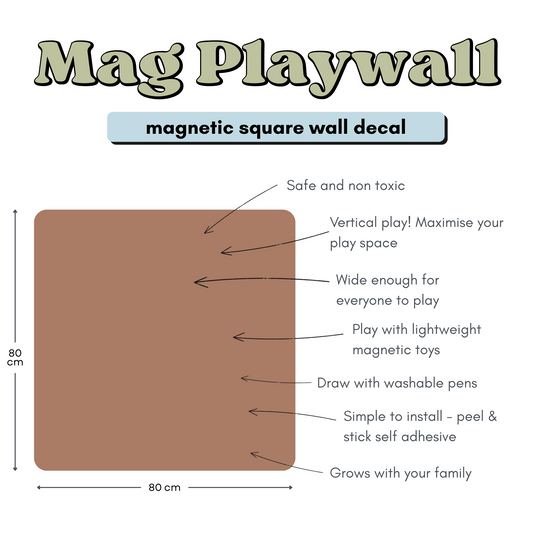
The Mag Playwall is a great example. It encourages repeated fine motor movements in a way that feels completely natural and engaging for children. Whether they’re tracing a shape, sorting by colour, or creating a story on the wall, they are building critical foundations for learning and independence. Plus it’s pretty enough to leave up on the wall all the time, your kids can go and play any time without a mess!
We’re not about pressure or perfection. We’re about purposeful play that supports the whole child.
Find the Mag Playwall here!
Final Thoughts
Fine motor skills are not built overnight, and they don’t need to be perfect. What they need is time, encouragement, and a little bit of trust.
Trust that your child will grow into their skills. Trust that play matters. Trust that by stepping back just a little, you are actually stepping up as a supporter of their independence.
So next time you see your child gripping a crayon, unzipping a bag, or peeling a sticker with that very serious look on their face, smile! They are doing important work. And it all adds up to something wonderful.
Want to learn more?
Check out these related posts:
- From Wobbles to Wiggles: Building Strong Gross Motor Skills Through Everyday Play!
-
Everything You Need to Know About Open-Ended Play – The Ultimate Guide!
- Fine Motor Skills for Preschoolers: 10 Easy Activities That Really Work!
- Fine Motor Skills: Little Moves for the Future
Or explore our product page for tools designed to support fine motor development: