8 Fun Ways to Learn Sight Words at Home or in the Classroom
Helping kids learn sight words can feel tricky at first but it does not have to be stressful. Sight words are those sneaky words that cannot always be sounded out and need to be recognised by sight. The good news is that with playful activities and a little creativity, learning these words can be fun, memorable, and supportive of other learning skills too.
We do not want to make sight word practice a race or rely on quick memory drills. Rushing children to memorise words can help them remember them short-term but does not support long-term spelling or understanding. Taking a slower, playful, multisensory approach helps tricky words stick in their memory while keeping learning enjoyable. You can read more about sight words in our blog post here: What are Sight Words? ‘Sight Words,’ ‘Tricky Words’ or ‘Heart Words’ Explained .
Here are eight hands-on ideas that work for both home and classroom settings!
1. Magnetic Letter Word Building on the Mag Playwall
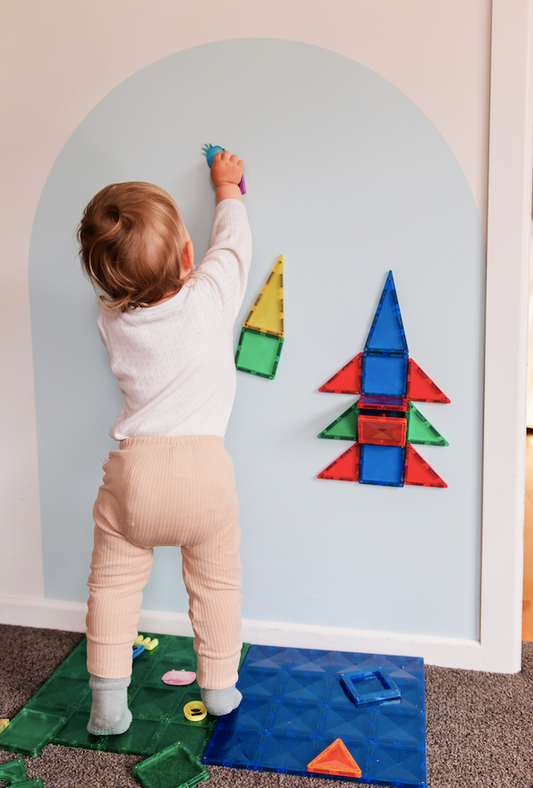
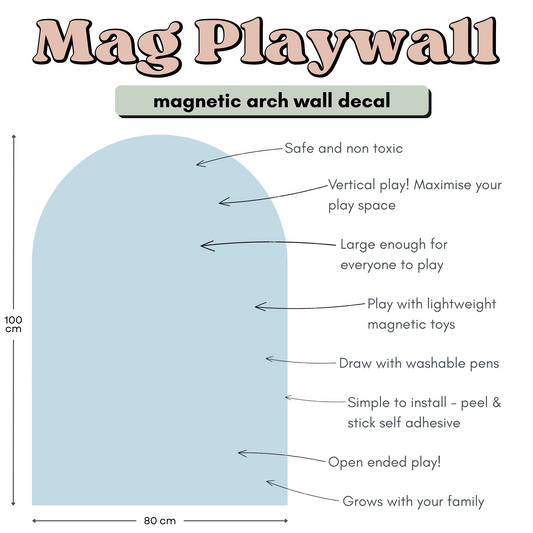
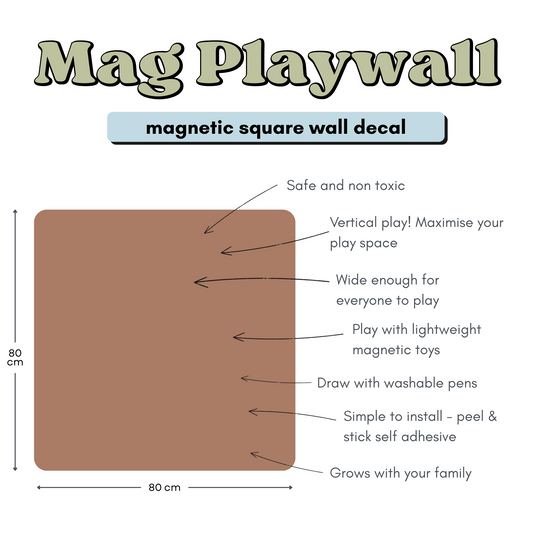
Use the Mag Playwall to let children build sight words with magnetic letters. Moving the letters around and physically spelling the words helps with memory and recognition. You can also underline or highlight the parts of the word that are tricky so children notice the irregular part. It is satisfying for little hands and gives a colourful, interactive twist to word practice.
2. Word Tracing in Sensory Materials
Trace sight words in sand, rice, or shaving cream for a sensory approach to learning. Feeling the shape of the letters while saying the word aloud helps children remember tricky spellings and makes practice feel more like play.
3. Sight Word Scavenger Hunt
Hide word cards around the room or stick them on the Mag Playwall. Encourage children to find and read each word. Adding a little competition or small rewards makes the hunt extra exciting.
4. Rainbow Writing
Write sight words using different colours on paper, whiteboards, or even on the Playwall. Repeating the words in multiple colours is visually appealing and helps children remember them.
5. Sight Word Hopscotch
Create a hopscotch grid with sight words instead of numbers. Children read the word they land on before taking their turn. Combining movement with reading makes learning active and fun.
6. Make a Simple Sight Word Board Game
Draw a path on paper or a whiteboard and write a sight word in each space. Use a dice or spinner to move along the path and have children read the word they land on before taking their turn. Displaying the words on the Mag Playwall adds a colourful reference and inspiration. This is a playful way to practise words together and sneak in a little family or classroom game time.
7. Sight Word Memory Game
Create pairs of word cards and play a memory matching game. Children flip cards and read each word as they try to find a match. Memory games are not just fun, they also help build working memory which is SO good for learning, especially maths. Using the Mag Playwall to keep the words in view can provide extra visual support and reinforcement.
8. Listening and Matching
Lay out sight word cards and say one aloud for children to find and point to. For an added challenge, have them write the word after spotting it. This activity strengthens listening skills, visual recognition, and early writing, and works perfectly in small groups or one-on-one sessions.
These activities are all hands-on, playful, and perfect for early readers. They help children recognise and remember tricky sight words while also supporting working memory, fine motor skills, and confidence. Using tools like the Mag Playwall adds an interactive, colourful element that makes practice more engaging. These strategies are tried and tested by an experienced classroom teacher who designed the Mag Playwall to make learning sight words fun and effective both at home and at school.
Here are 20 first sight words that are truly not decodable to practise at home or in the classroom: the, said, come, does, have, some, one, friend, school, was, who, where, there, what, love, here, doesn’t, want, put, your
Want to learn more?
Check out these related posts:
- Everything You Need to Know About Open-Ended Play – The Ultimate Guide!
- The Ultimate Guide to Independent Play for Kids
- What are Sight Words? ‘Sight Words,’ ‘Tricky Words’ or ‘Heart Words’ Explained
- sight words
Or explore our product page for toys designed by a teacher to support learning at home while they have fun!